Heat pump vs boiler: how to decide for your home
Choosing between a heat pump and a boiler is not just about swapping one box for another. It’s a decision that affects how your entire home is heated, how comfortable you feel throughout the year, and how prepared your property is for a low-carbon future. It involves considering your home's insulation, heating system design, and energy efficiency to ensure reliable warmth while reducing your environmental impact. Making the right choice means thinking beyond installation, about long-term savings, comfort, and sustainability.
How heat pumps and boilers actually heat your home
Traditional gas and oil boilers heat water to high "flow temperatures", often 65 to 80°C. That hot water races through your radiators, which can be relatively small and still keep rooms warm.
Heat pumps work differently. They usually run at lower flow temperatures, often between 35 and 55°C, and deliver a gentler, more continuous heat. To feel as warm, your home often needs better insulation and larger radiators or underfloor heating.
The benefit is efficiency. A well-designed heat pump can deliver 2.5 to 4 units of heat for every 1 unit of electricity. Boilers cannot do this; even the best only get close to 1:1 from the fuel they burn.
Is your home ready for a heat pump?
Most homes can work with a heat pump, but some need more preparation. Here is a quick suitability checklist to think through before you commit.
- Insulation: Loft and cavity walls are well insulated, and draughts are reduced.
- Emitters: Radiators sized for lower flow temperatures or underfloor heating.
- Hot water: Space for a cylinder and preference for stored hot water.
- Outdoor unit: Space for a quiet external unit with good airflow.
- Neighbours: Sensible unit placement to manage noise and appearance.
If you live in an older, solid-wall property, extra attention to insulation and radiator sizing is important. In newer estates, the building fabric is often better, so changes may be smaller, but radiators still need checking for low temperature operation.
Heat pumps in the West Sussex housing mix
Across West Sussex, many villages feature older solid wall cottages and farmhouses, while newer estates around towns like Pulborough tend to have better insulation and double glazing as standard. Both types can suit heat pumps, provided the design takes account of heat loss, radiator sizes, and any planning or space constraints for the external unit.
Heat pumps, hot water cylinders and space planning
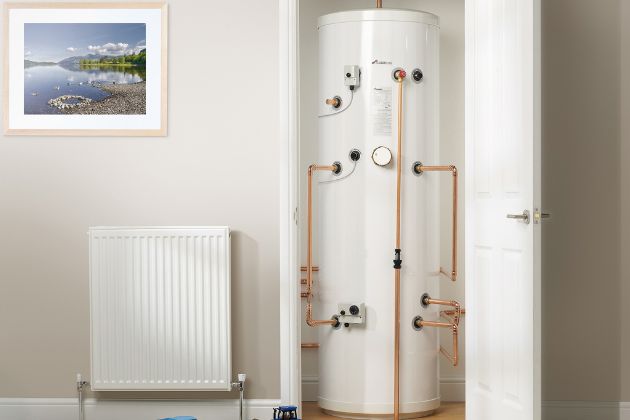
Most air source heat pumps work with a hot water cylinder rather than a combi-style system. This means you need enough space for a cylinder, usually in an airing cupboard, loft, or utility room.
The cylinder is sized for your household’s hot water use. A good installer will ask about showers, baths, and simultaneous use, then specify the volume and heat pump controls so you are not running out of hot water or heating more than you need.
Outside, the heat pump unit needs clear airflow, a firm base, and sensible routing of pipework and cables. Thoughtful placement helps with noise performance and maintenance access.
Hybrid systems: when a mix makes sense
Hybrid systems combine a smaller heat pump with an existing gas or oil boiler. The heat pump handles most of the heating in milder weather, while the boiler helps out on the very coldest days or for rapid hot water top ups.
This can be a stepping stone for homes that are harder to insulate, or where budgets and disruption need to be managed in stages. It still cuts carbon and fuel use, but keeps the safety net of a boiler for peak demand.
What good system design should include
A successful heat pump or high-efficiency boiler installation is all about design, not just the kit. If an installer skips the design stage, performance will suffer.
At a minimum, good design should include:
- Room by room heat loss calculations to size the heat pump or boiler correctly.
- Radiator and pipework checks to ensure low-temperature heating is realistic.
- Weather compensation controls so the water temperature automatically adjusts with outdoor conditions.
- Proper commissioning, including flow rate balancing, control setup, and run time checks.
Weather compensation is particularly powerful for heat pumps. By lowering flow temperatures when it is milder outside, it boosts efficiency and keeps indoor temperatures more stable without constant thermostat fiddling.
Common myths about heat pumps
"They do not work in cold weather"
Modern heat pumps are designed to work in sub zero temperatures and are widely used in much colder countries than the UK. Performance does dip slightly as the air gets very cold, but good design and correct sizing keep homes warm even on frosty days.
"They only suit new builds"
Heat pumps are often easiest in new, well-insulated homes, but thousands of older homes run very successfully on them too. The key is making sure insulation, radiator sizes and controls are addressed as part of the project.
"They cost more to run than gas"
Running costs depend on system efficiency, energy tariffs, and how the controls are used. A well designed and commissioned heat pump, operated mainly at low flow temperatures, can be very competitive, especially as the grid gets greener over time.
Installer questions you should ask
Who you choose to design and fit your system is as important as the brand you pick. Before you sign anything, ask potential installers:
- MCS certification: Are you MCS certified for heat pumps and can you show recent projects?
- Design detail: Will you provide full heat loss calculations and a system design I can review?
- Commissioning and warranty: How will you commission the system, and how does this link to the manufacturer’s warranty?
- Monitoring and optimisation: Do you offer post-installation checks or remote monitoring to fine tune performance?
- Aftercare: What servicing, fault finding and support do you provide over the first few years?
Clear answers to these questions are a strong indicator that your installer takes performance, not just installation speed, seriously.
Next steps for your home heating decision
Choosing between a heat pump and a boiler starts with understanding your home: its insulation, radiators, hot water needs and available space. With proper design, both can keep you warm, but heat pumps offer a clear route towards lower carbon heating and a more future proof system.
If you would like tailored advice or a detailed heat pump survey for your home, Pipeline Plumbing Services Ltd can help. Call 01903740538 to book an expert assessment, or make an enquiry via our air source heat pump service page and find out more about installations in your area, including our Pulborough ASHP services.